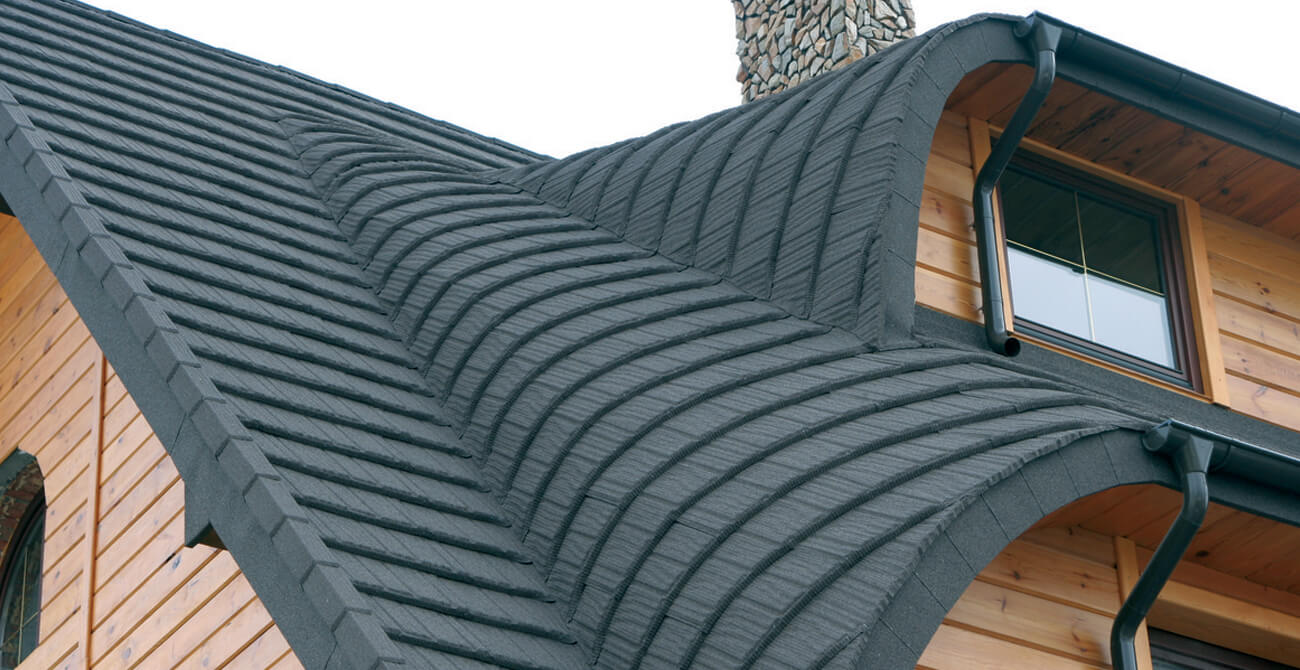
Stone-coated roof tiles have become established in our country as a roof covering imitating wooden slate. They are particularly visible on single-family houses and guest houses in the mountains. This material is easy to work with and allows difficult roof features to be finished attractively. It also has many advantages, such as naturally preventing snow from sliding off the roof. It is lightweight yet very strong. It withstands hailstorms and high winds, and the installation method even ensures safety during an earthquake... Wait a moment – an earthquake? In Poland?
Apart from a few very minor but officially recorded earthquakes in our country, it is worth knowing that this type of covering comes all the way from New Zealand. It was developed and tested there in all conditions comparable to ours, but more extreme, which is a recommendation in itself.
But let us turn to appearance. These tiles are covered with natural stone granules. The surface is therefore very rough and may collect dirt. However, it is varied enough in colour to make the dirt hard to spot. Roofs of this type have been used in Poland for many years, especially in the mountains, where their advantages are particularly evident. On a holiday in Zakopane, take a look at local roofs and see how good they look even after years of use.
This is part of the article Attractive roof coverings. If you have not read the introduction yet, I encourage you to do so.
Read on: Fibre cement sheets
Introduction: attractive roof coverings
1. Attractive roofs – clay tiles
2. Attractive roofs – concrete tiles
3. Attractive roofs – metal roof tiles
4. Attractive roofs – stone-coated tiles
5. Attractive roofs – fibre cement sheets
6. Attractive roofs – natural and traditional coverings
Questions about your roof?
An adviser will review your plans and choose materials to suit your budget.