Walling materials
Porotherm, Thermopor and Prefabet Gazobeton are our recommended manufacturers of hollow blocks and walling materials that ensure a strong, robust building for many years. They provide optimal wall insulation.
Categories
Products (7)
-
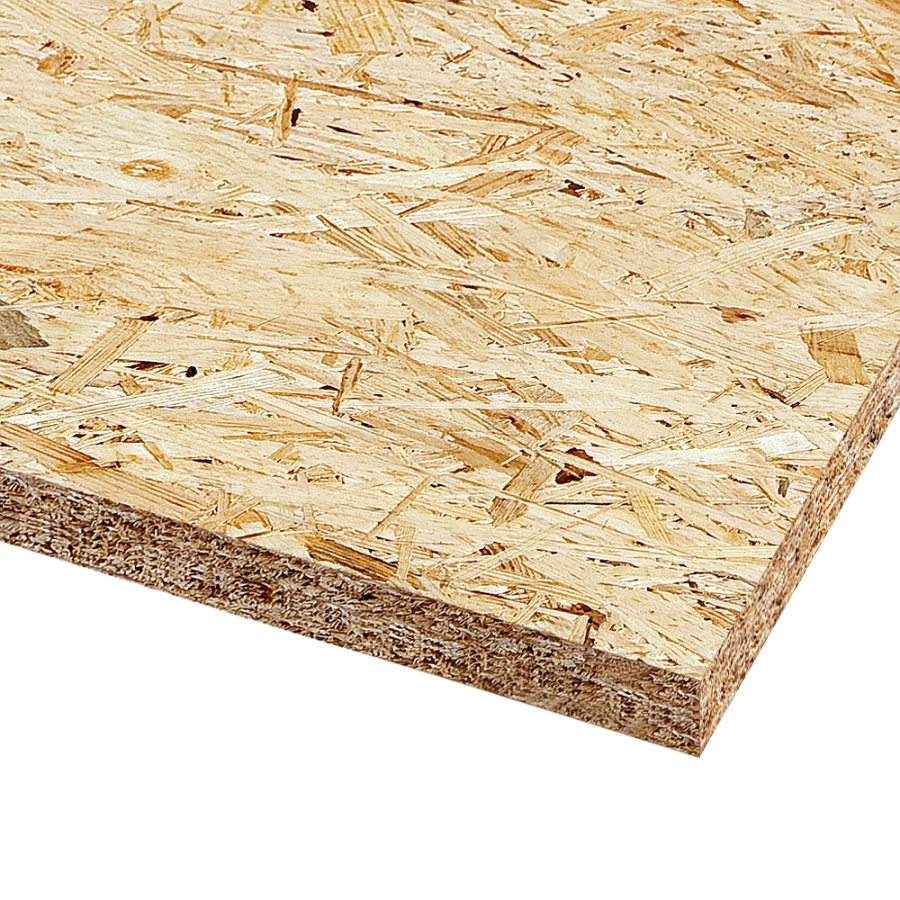 OSB board
-
 Porotherm clay floor systems
-
 Porotherm for load-bearing walls
-
 Porotherm for load-bearing walls with additional insulation
-
 Porotherm for partitions
-
 Porotherm sound-insulating blocks
-
 Porotherm supplementary floor blocks
The role of walls and their properties
A building cannot function properly without suitable walls. They protect it from changing weather, retain heat and support the floors and roof. So what properties should a home's internal and external walls have? They must:- be strong enough to carry the loads from the floors and roof;
- provide additional protection, in the case of external walls, against cold, moisture, rain, snow and wind, as well as noise and impacts;
- have very good thermal insulation, measured by the thermal transmittance value U: the lower the value, the better;
- have good thermal mass – the ability to store heat and release it slowly.
Types of wall
A single-layer wall consists of just one layer of building material. The brick layer provides both structural support and thermal insulation.
A two-layer wall consists of two layers:- a load-bearing layer 15-30 cm thick, which can be built from any material: clay bricks or hollow blocks, aerated concrete blocks, calcium silicate units or expanded clay aggregate concrete; it also stores heat;
- a layer of mineral wool or expanded polystyrene insulation 12-20 cm thick, fixed to the outside of the wall. This insulation prevents lintels and floor ring beams from acting as thermal bridges, where heat loss is greater.
- the load-bearing layer, 15-30 cm thick, must be strong enough to carry the loads; it is built from clay masonry, aerated concrete, calcium silicate units or expanded clay aggregate concrete;
- the insulation layer, 8-15 cm thick, of mineral wool or expanded polystyrene, reduces heat loss;
- the façade layer, also called the outer protective layer, 8-12 cm thick, protects the insulation against damage and the weather. It can be built from bricks that do not need rendering, such as calcium silicate or clinker bricks, or from stone slabs.
- partition walls – divide the inside of the home into rooms;
- non-load-bearing external walls – external enclosures that perform no structural function and carry only their own weight. Their main purpose is to separate the interior from its surroundings and protect it against the weather. They can be masonry or framed walls;
- load-bearing walls, which transfer their own weight and loads from other components, such as roofs, floors and balconies, to the foundations or other parts of the structure;
What are walls made from?
The following materials are used to build walls and floors:- aerated concrete,
- traditional clay masonry,
- porous clay masonry,
- calcium silicate units,
- expanded clay aggregate concrete.
Our range includes aerated concrete, clay masonry and calcium silicate products from leading manufacturers.
Walls and floors are built from components such as bricks, solid blocks, hollow blocks, load-bearing panels, floor slabs, floor beams and lintel beams.
Aerated concrete
Aerated concrete is made from sand, lime, cement and water. Aerated concrete blocks and thin blocks are used to build the above-ground parts of houses, blocks of flats, public buildings, industrial buildings and utility buildings.
It can also be used for other building components: U-shaped units and beams can form lintels, while thin blocks with insulation can enclose floor ring beams and posts in knee walls.
Advantages and disadvantages of aerated concrete:- its porous structure makes it lightweight and gives it good thermal insulation properties;
- it provides good thermal insulation, allowing thinner walls;
- it is soft and easy to work, but easily damaged, for example during transport;
- it provides poor sound insulation because the wall is lightweight;
- it absorbs quite a lot of water, so both blocks and walls must be protected against prolonged contact with water;
- its porous structure and high water absorption make it unsuitable as a façade material or for unrendered landscape structures.
Our range also includes profiled blocks that can be joined without mortar in the vertical joints, allowing accurate construction and a smooth surface.
Clay masonry
Clay masonry is one of the oldest building materials. Clay building products are made from clay mixed with sand, ash and other substances.
Traditional clay masonry
Traditional clay products are made from a ceramic body that is shaped, dried and then fired.
Advantages of traditional clay products:- strength,
- durability,
- heat storage capacity,
- frost resistance,
- resistance to mechanical damage,
- non-combustibility and fire resistance,
- water vapour permeability.
Porous clay masonry (thermally insulating clay masonry)
Porous clay products are made from clay mixed with sawdust, wood flour or other materials that burn away during firing, leaving closed micropores in the clay. The complex pattern of voids found in most of these products improves their thermal performance.
Advantages of porous clay products:- high thermal insulation (they can be used for single-layer external walls without additional insulation),
- heat storage capacity,
- high sound insulation,
- strength,
- durability,
- non-combustibility and fire resistance,
- low weight,
- water vapour permeability,
- resistance to wind penetration.
Porous clay is used to make bricks (solid, modular, lattice-perforated and perforated), hollow blocks (for walls, floors, ventilation and flues), roof tiles and roof accessories.
Many clay products, including traditional ones, have profiled sides so that mortar is needed only in the horizontal joints, speeding up bricklaying. Large porous clay blocks make wall construction fastest. Clay masonry is used for all types of wall: single-layer and two-layer external walls, the outer and inner layers of three-layer walls, internal structural walls and partitions.
Sintered clay products are made from clays with a low sintering temperature and a high melting temperature. They have high mechanical strength and low water absorption, and are frost-resistant, durable and chemically resistant.
Sintered clay is used to make clinker bricks, chimney bricks and sewer bricks.
Calcium silicate products
Calcium silicate products are also known as sand-lime products. They are made from a mixture of ground quartz sand (90% to 92% of the total mass), quicklime (5% to 8% of the mass) and water.
This combination gives them the lowest radioactivity of any building material. The manufacturing process makes every unit virtually identical in size, significantly reducing construction time. The finished product has a light colour that can be modified by adding pigments.
The range of sand-lime building products is broad: bricks, solid blocks, hollow blocks and shaped units. They are mainly used for external and internal structural walls, façade facing and boundary walls.
Advantages of sand-lime products:- low radioactivity,
- high frost resistance,
- high mechanical strength,
- high sound insulation.
These building materials are cheaper than similar clay products. However, they are not resistant to damp, so they are not used for below-ground walls. Most calcium silicate bricks and blocks also need additional insulation.
We also supply complete building systems that allow an entire building to be constructed from one material. They include small- and large-format wall components (blocks, load-bearing panels and large blocks), floor and roof slabs, U-shaped units for reinforced concrete lintels, prefabricated lintels, renders and mortars.
Walling material manufacturers
We offer walling materials from leading companies:- Wienerberger: Porotherm,
- Röben: Thermopor,
- Prefabet: Gazobeton,
Contact your nearest branch
Ambit branch 4D Grupa network partner