Roof finishing components
When building or renovating a building's roof covering, do not underestimate the importance of roofing accessories. We offer ventilation equipment, chimney accessories, accessories that make it easier to move across roof slopes, lightning protection systems, and accessories that help keep roofs clean and protect against the adverse effects of precipitation. Discover what is worth investing in to extend the life of your home's roof. We offer roofing accessories from MDM, Klöber HPI, Systemy odgromowe Błyskawica.
Categories
- Cladding roof gables and chimneys with..
-
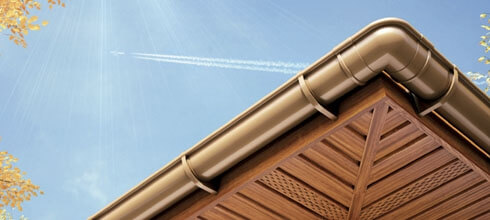 Soffits
-
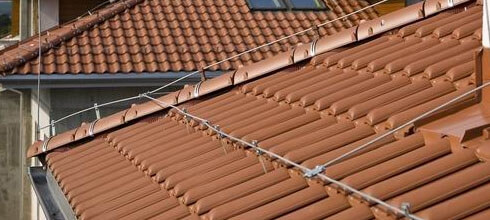 Lightning protection systems
- Principles of roof ventilation
- Protecting roofs against intruders and dirt
-
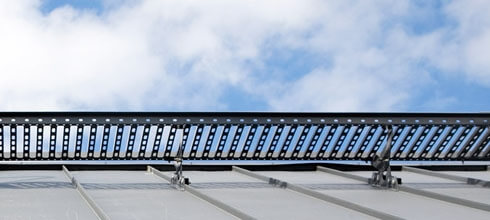 Roof access components
-
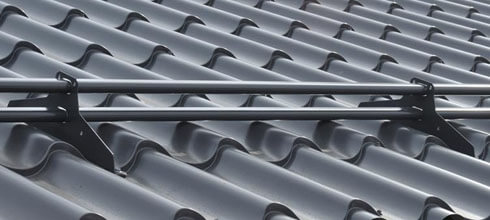 Roof safety
-
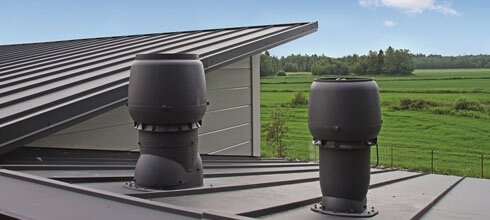 Principles of room ventilation
- Roofing accessories
- Chimney flashing with flashing tape
Roof accessories are important parts of a roof, even if they are not always visible. It is worth investing in them: leaving them out can lead to roof repairs or refurbishment that cost far more.
When building a new roof, reconstructing one or refurbishing an old roof, remember that the roof and its users face many risks, including snow build-up and slippage, moisture, the growth of moss and lichens, and movement of the roof structure. Roof accessories address these problems by protecting vulnerable areas, extending the life of the roof and improving safety for its users. They can be divided into the following groups:- ventilation accessories: chimneys, eaves, ridge rolls and vents, eaves protection components and ventilation tiles,
- accessories that protect against rainwater (such as roof valleys),
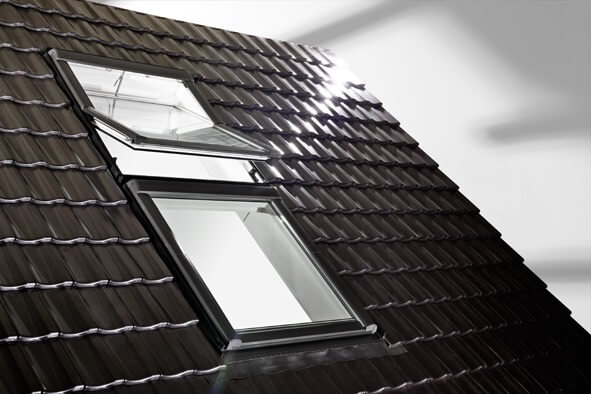
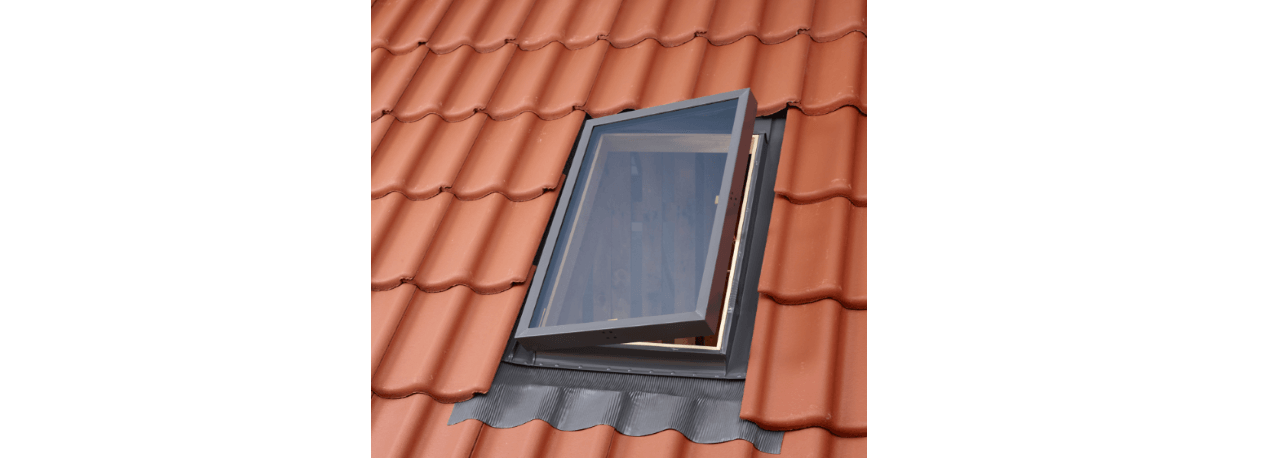
- roof access accessories,
- safety accessories – snow protection (snow guards, snow retention logs and electric de-icing systems),
- accessories that keep the roof clean (shaped copper components),
- lightning protection accessories.
How can you buy roof accessories? You can order them from a manufacturer's catalogue or buy them separately, choosing the right shape, colour and size. Accessories can be fitted to roofs covered with clay tiles, concrete tiles, bitumen shingles, metal roof tiles, corrugated sheets and trapezoidal sheets.
If you need professional help with choosing and fitting products, contact the specialists at Ambit. We will be happy to advise you on the most suitable solutions.
Chimney
The chimney is a very important part of a house and reaches higher than any other part. Most of it remains out of sight, inside the building. It carries away flue gases and supplies air to the central heating boiler or other heat sources.
In every building, the chimney also provides ventilation for rooms such as the kitchen, bathroom and boiler room. It should therefore be suitable for different loads and fuel types. The chimney must also be airtight and resistant to flue gases, moisture and the stresses that arise in its materials during use. It must meet the relevant fire safety requirements to protect the house and its occupants.
Chimney systems
In houses built today, we tend to speak of chimney systems rather than simply chimneys. Traditional brick chimneys certainly differ from modern technological solutions. Chimney systems are steel or ceramic structures. They have a circular cross-section and a smooth internal surface without bends or projections, reducing resistance to the flow of air and flue gases.
A single-family house may have one or more chimneys. For practical reasons, all the ducts are usually housed in a single chimney: a flue for oil- and gas-fired appliances, a smoke flue for solid-fuel boilers, for example those burning coal, and a ventilation duct that carries stale air from the rooms to the outside.
A chimney needs a foundation, so it is usually built at the same time as the load-bearing walls. It is positioned in the central part of the building, where the boiler room is planned, next to the internal walls. The part projecting above the roof can be clad in clinker bricks, built from bricks, hollow ceramic blocks or ceramic-concrete blocks, and rendered.
For a quick, easy and watertight joint between the roof slope and the chimney, you will need chimney flashing tape made from lead or aluminium sheet with butylene adhesive on the underside.
Ridge and eaves
The eaves are the lower, horizontal edge of the roof, usually projecting beyond the façade. A gutter normally runs along them.
The ridge is the highest part of the roof, formed where the roof slopes meet. This is the main ridge, as distinct from the inclined intersections of roof slopes, known as hips.
The ridge and eaves ventilate the roof slopes, but they are also exposed to wind-driven rain. They can provide entry routes for insects, and the eaves can also admit rodents and birds.
Ridge rolls
Our roof accessories include ridge rolls for sealing and ventilation. These protect horizontal ridges, inclined ridges (hips) and roof corners. The roll is approximately 300 mm wide and is cut to the required length from a roll, usually 5 linear metres long. Its edges are aluminium sheet, with a nonwoven centre that provides ventilation.
Ridge rolls prevent water from entering beneath the roof covering while allowing excess moisture to escape from within the roof and keeping insects out.
Ridge rolls are versatile because they can be used with tiles of any profile height.
Ridge vent
A ridge vent is an alternative to a ridge roll on horizontal ridges. It is a prefabricated component 1 or 2 m long, so you need the appropriate number of vents for each ridge. Its width is matched to the type of roof tile and ranges from 12 to 20 cm. The supporting part, fitted directly to the ridge, is made from plastic, usually PCV, with suitable openings.
The vent may have a special brush along the sides of its supporting part. The bristles are made from flexible, UV-resistant plastic in a colour matched to the tiles. Their length depends on the profile height of the roofing components and ranges from 50 to 90 mm.
Eaves flashing
These roof accessories protect the eaves against rainwater penetration. Eaves flashing is a shaped metal component or a plastic strip. Correctly fitted, it directs water running off the roof covering into the gutters.
Eaves mesh and combs
These provide ventilation and keep animals out. They are made from plastics such as polypropylene, which is highly resistant to UV radiation. The mesh is supplied in rolls 5 m long, in heights from 80 mm to 180 mm. Combs are flat components 1 m long and of a suitable height; they may also be combined with a ventilation grille. Both mesh and combs come in colours matched to the roof tiles. Once fitted, they are discreet and do not detract from the roof's appearance. Do not overlook these components: otherwise, your spring inspection may reveal signs of pests that entered through unprotected eaves.
Ventilation tiles (roof slope vents)
In many cases, such as large or complex roof slopes, ventilation through the eaves and ridge may be insufficient. Ventilation tiles can help by allowing air beneath the roof covering. Ridge ventilation can also be improved with a ridge end cap made from PCV or aluminium. The cap replaces a ridge end tile and costs less. These are highly practical roof accessories.
Ridge tile clips
A ridge tile is a ceramic component, a type of roof tile. It covers the ridge and hips of the roof and is fixed to ridge battens with clips.
Special clips secure ridge tiles to the ridge batten. Each type of ridge tile requires its own model of clip.
Roof valleys
Complex roofs require water to be drained from the internal angles where roof slopes meet. These areas are particularly vulnerable to rainwater ingress and need proper protection. A valley gutter is the best solution. It is formed using roof valley sheets: specially pressed, ribbed metal sheets, usually aluminium, with a thickness of 0,5 to 0,7 mm. These materials combine high strength with flexibility. The valley withstands prolonged exposure to rain.
Valley sheets are roof accessories that seal the junction between roof slopes and help protect the gutters. Their profiled surface slows the flow of rainwater. Reducing the load on the gutter, even during heavy rain, improves its durability and extends its life. The valley colours match the roof tiles available from our builders' merchant.
Correct valley installation is essential. Valleys are secured only with special clips. Screws or nails would create leaks. Use a special flexible material for sealing, such as a self-adhesive wedge. Where two valleys meet, join them with the appropriate tape.
Roof access accessories
Roof walkways and steps allow you to move around on the roof. Steps provide access onto it, while walkways give you a safe place to stand for inspections or repairs.
Roof walkways and steps are hardly decorative, so many property owners choose to leave them out. On roof slopes steeper than 20 degrees, these components are absolutely essential for safe access. Walkways and steps are made from metal: hot-dip galvanised steel or painted aluminium. Their colours suit most roof coverings, and they are just 25 cm wide. Roof tile systems include tiles with brackets for a walkway or step. Roof access accessories therefore form part of the roofing system.
Snow guards and snow retention logs
Snow guards and snow retention logs prevent snow from sliding off the roof slopes. This improves safety for passers-by and prevents gutters or flashing from being torn off.
Snow guards have a ladder-like form and are made from steel or aluminium. They can be finished with suitable polyester coatings to match the colour of the roof covering. Wooden logs are a dozen or so centimetres in diameter and rest on special hooks.
Electric de-icing systems
Electric de-icing systems:- prevent snow and ice from accumulating on roofs,
- prevent water from freezing in gutters and downpipes and damaging them,
- prevent water stains on building façades,
- prevent overhanging ice (icicles) from forming and snow from accumulating in gutters,
- protect building façades,
- protect people and property from falling ice and icicles.
Heating systems for gutters, downpipes and roofs use UV-resistant, constant-resistance heating cables.
The cables are laid in gutters and downpipes using special installation accessories, including:
- gutter brackets (for downpipes) for the roof edge,
- mounting tapes,
- cables with clips,
- installation tapes for roof channels.
Copper components
If moisture is not properly drained from a roof, fungi, moss, lichens and algae may grow. Special copper components are fitted to the roof surface. When moisture reacts with copper, plants and lichens will not grow. We recommend shaped copper components that match the roofing elements or special copper tapes. These solutions increase the area over which water interacts with copper. The metal components are small and almost invisible. The roof covering needs no preparation for fitting copper components, which can be installed on a finished roof.
Lightning protection accessories
Under building law, small houses do not require a lightning protection system. However, fitting one is worth considering, as a lightning strike can have very dangerous consequences. These include cracking and damage to non-combustible materials, concrete and bricks; junction boxes being torn out; damage to electrical wiring and sockets; damage to audio, video and household appliances; electric shock to people inside the building; and even fire.
A lightning protection system has four parts: air terminals, down conductors, earthing conductors and earth electrodes. The upper part of the system consists of air terminals, which intercept the lightning current directly when a strike occurs. Purpose-made air terminals are metal: galvanised steel, stainless steel or copper. A diameter greater than 6 mm is advisable. The wires are placed mainly along the ridge and side edges of the roof, and on the chimney and aerial mast.
Down conductors – carry current from the air terminals to the earth electrodes. They are usually made from the same materials as the air terminals, or from galvanised steel strips with a cross-section of 20 x 3 mm. They are fitted on the outside of the building, at least 2 cm from the wall, beneath render where the walls contain no flammable materials, or along gutters and downpipes.
Earth electrodes are metal components installed in the ground to dissipate the energy from a lightning strike. Reinforced concrete components in the underground part of the building, in its foundations, can serve as natural earth electrodes, conducting lightning energy into the ground. Another option is to use metal pipelines. If natural earth electrodes cannot be provided, purpose-made electrodes, such as flat bars or galvanised steel strips, must be installed around the entire building. Vertical earth electrodes are an alternative: metal rods driven into the ground where the down conductors reach it. Their average length is 3 m.
Other products
Ambit also offers other roof accessories in addition to those listed above. For more information, click the relevant items at the top of the page.
Manufacturers
The Polish market offers a wide choice of components from many manufacturers. Our range includes the best products from leading companies:- MDM
- Klöber HPI
- Elko-Bis lightning protection systems
All the products we offer come with a long-term warranty. We can also provide professional help with choosing roof accessories: simply arrange a meeting with an Ambit specialist. They will be happy to answer your questions and advise you on the solution that best meets your needs, helping you make the right purchase every time!
Contact your nearest branch
Ambit branch 4D Grupa network partner