Clay roof tile
For anyone who values good looks, we recommend clay roof tiles. Their attractive appearance makes them an excellent match for buildings in a classic style. Made from brick clay, they offer high durability. Customers can choose from various types, including monk-and-nun, S-profile, plain and interlocking tiles, in a range of colours. They are installed on battens and counterbattens covered with an underlay membrane. We recommend clay roof tiles from Meyer-Holsen, Koramic, Röben, swissporTON, Braas and FCB.
Categories
-
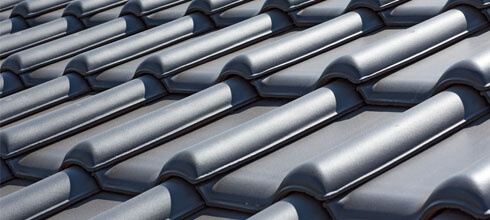 Flat-profile Dutch pantiles – the most frequently chosen clay roof tiles
-
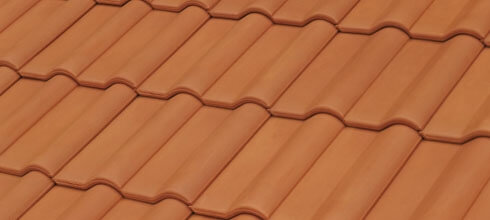 Medium- and small-format clay roof tiles..
-
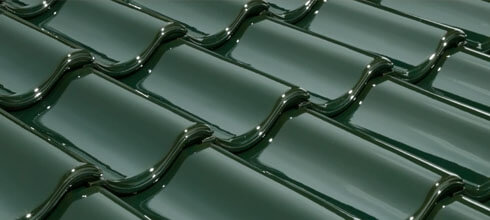 S-profile roof tiles – traditional wave-shaped clay tiles
-
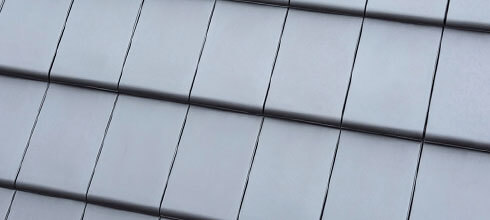 Modern, elegant flat-profile roof tiles and alternatives
-
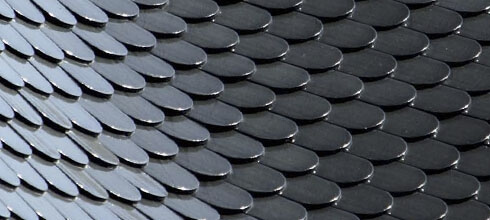 Traditional clay roof tile profiles
-
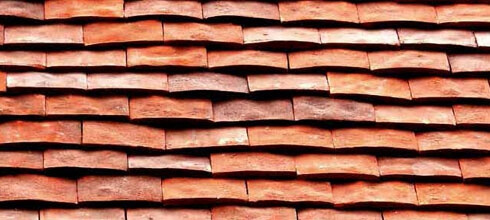 Unusual clay roof tiles
It is a fact that clay roof tiles are the oldest type of roof covering, made from brick clay. Their colour and shape have become a lasting part of our collective imagination. Just look at children's drawings of pitched roofs with clearly defined red tiles. There is a reason children choose this colour: red is the covering's natural colour.
Treatments such as engobing or glazing the clay can give the roof another attractive colour to suit the customer's preferences. The tiles are laid on a framework of battens and counterbattens covered with an underlay membrane. Profiled nibs on the underside hold them securely on the structure. Only certain types, such as verge tiles, need additional fixing with screws.
There are 4 main types of clay roof tile:
- monk-and-nun tiles,
- plain clay tiles,
- S-profile tiles,
- interlocking tiles,
The history of clay roof tiles
Clay roof tiles were already known in the Roman Empire. In Central Europe, they gained recognition only in the Middle Ages. The first machine for manufacturing these building elements was constructed in Berlin in the latter half of the nineteenth century. From the outset, they were laid on temples, palaces and elegant townhouses. Even today, in an age of modern technology and innovative solutions, homes roofed with this material are a symbol of prestige and indicate the family's status.
Where are clay roof tiles used, and what are their advantages?
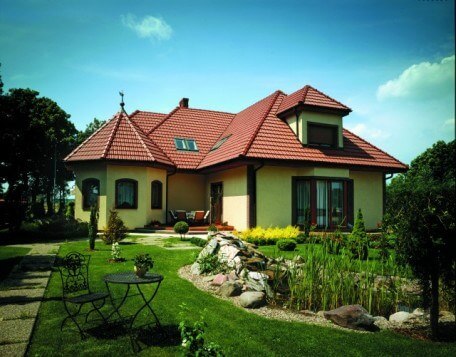
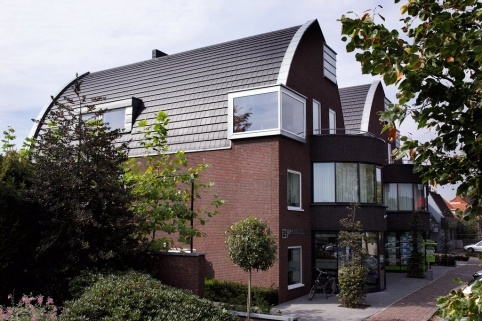
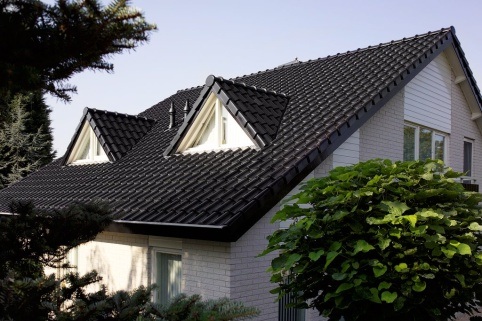
They are certainly among the most attractive and highly valued finishing materials. They are an excellent match for homes with classic architecture. Flat, rectangular interlocking tiles in a wide range of colours were developed for more modern buildings. They enhance the appearance of façades, particularly rendered, timber or timber-finished ones. They also work well with stone elements, clinker bricks or tiles that imitate these bricks.
They look their best when shown off on a roof pitched at around 45°. They can cover roofs of varying complexity, including turrets and other decorative features. Clay roof tiles are very durable. With proper installation, a roof finished with these tiles can last 100 years or more. These products provide excellent ventilation and effective rainwater drainage. Their long service life and straightforward maintenance further contribute to their popularity.
Double grooves at both the top and side of the tile provide excellent protection from water, wind-driven snow and dust. Fired models resist the aggressive conditions caused by bird droppings and acid rain and protect the roof structure from moisture. They are also fire- and frost-resistant. These tiles are made exclusively from natural materials such as clay, loam and water. They contain no harmful substances or additives and are therefore considered environmentally friendly. Their high thermal resistance, excellent heat storage properties and favourable water vapour permeability explain why people often say that “roof tiles breathe”.
A roof covered with clay tiles creates a pleasant microclimate that discourages mould and microbial growth, particularly benefiting usable loft spaces. As their colours are integral to the product, rather than produced using emulsion paint, glaze, coating or engobe, they resist UV radiation and other harmful weather effects throughout their service life. For many years they need virtually no repairs or maintenance. They can occasionally be washed with water.
Experience shows that roofs covered with clay tiles are more resistant to weather events such as tornadoes and hurricanes. This is due to the small format of these building elements. A heavy roof covering also guarantees better sound insulation than a lightweight one. These tiles are best installed by qualified professionals. Visit one of Ambit's branches, where we can help you find a roofing team with many years of experience in this work. You can also contact us by email or phone.
Types of clay roof tile
Monk-and-nun tiles
This roof covering consists of 2 types of tile: monk and nun. They are long, with a tapered, trough-like shape. They are fixed to battens with clips and wire. Profiled overlaps along their edges make installation easier. Monk-and-nun roofs are self-ventilating, so no special ventilation gap needs to be left beneath them. They are regarded as the most refined clay roof covering, but also the most expensive because of the high number of tiles needed and labour-intensive installation. They are mainly intended for restoring historic roofs.
Plain clay tiles
Alongside monk-and-nun tiles, plain clay tiles are among the oldest types of clay roof tile. The Polish name, karpiówka, comes from a laying pattern resembling carp scales, referring to single laying. They can also be laid in a crown pattern, with double laying. Plain clay tiles are flat and narrow. A typical tile is rectangular with one shorter edge rounded. Hexagonal, straight, segmental, curved, Gothic and church variants are also available.
The tile's face can be smooth or grooved. Profiled and even hand-ornamented types are also available. Its shape and dimensions make it the most adaptable of these building products. It can easily cover eyebrow dormers and roof valleys without metal flashing. Plain clay tiles are also an excellent choice for complex roof forms, such as conical roofs.
S-profile tiles (Dutch tiles, S)
The tile's transverse cross-section resembles the letter S. It provides a watertight covering and good drainage. It also allows a variable covering length. S-profile tiles are particularly valued when replacing old roof coverings. In many cases, their variable covering width removes the need to reposition old battens, reducing both renovation time and cost.
Interlocking tiles
Alongside plain clay tiles, interlocking tiles are the most popular clay roof covering. Their characteristic feature is often generously sized profiled overlaps at the top and side edges. Their undersides are profiled too. These profiles form interlocks that make the tiles easier to fit together during installation and improve watertightness. The most popular type is the Marseille tile, with two characteristic troughs. A wave is another common face shape for interlocking tiles. Other variants resemble S-profile or monk-and-nun tiles, and sliding models can accommodate different batten layouts.
Clay roof tile manufacturers
We offer products from trusted manufacturers that place great importance on tile quality. These include:
- Koramic,
- Röben,
- swissporTON,
- BMI Braas,
- Nelskamp
- Tejas Borja
- FCB.
All these products carry a long-term warranty. If you need expert help choosing clay roof tiles, please get in touch. We will arrange a meeting with one of our specialists who will answer your questions and provide detailed information about the products we offer, helping you find the right solution for your needs. Ambit works throughout Pomorze. Our branches are in the following cities:
- Elbląg,
- Gdańsk,
- Gdynia,
- Kartuzy,
- Koszalin,
- Kościerzyna,
- Kwidzyn,
- Słupsk,

Contact your nearest branch
Ambit branch 4D Grupa network partner