Flat roofs are very common and suit modern, minimalist styles. Despite the name, they must have a slope of at least 3% to drain water effectively. This type of roof requires different solutions from standard roof tiles, which need a slope of at least 15%. What options are available for covering a flat roof? Find out in the article below.
Types and characteristics of flat roof coverings
A flat roof covering must, above all, be watertight. This is because of the low slope and the tendency for water to collect in corners and recesses. These roofs are usually enclosed on all sides, hiding them effectively from view. For this reason, appearance should not be a particularly important consideration.
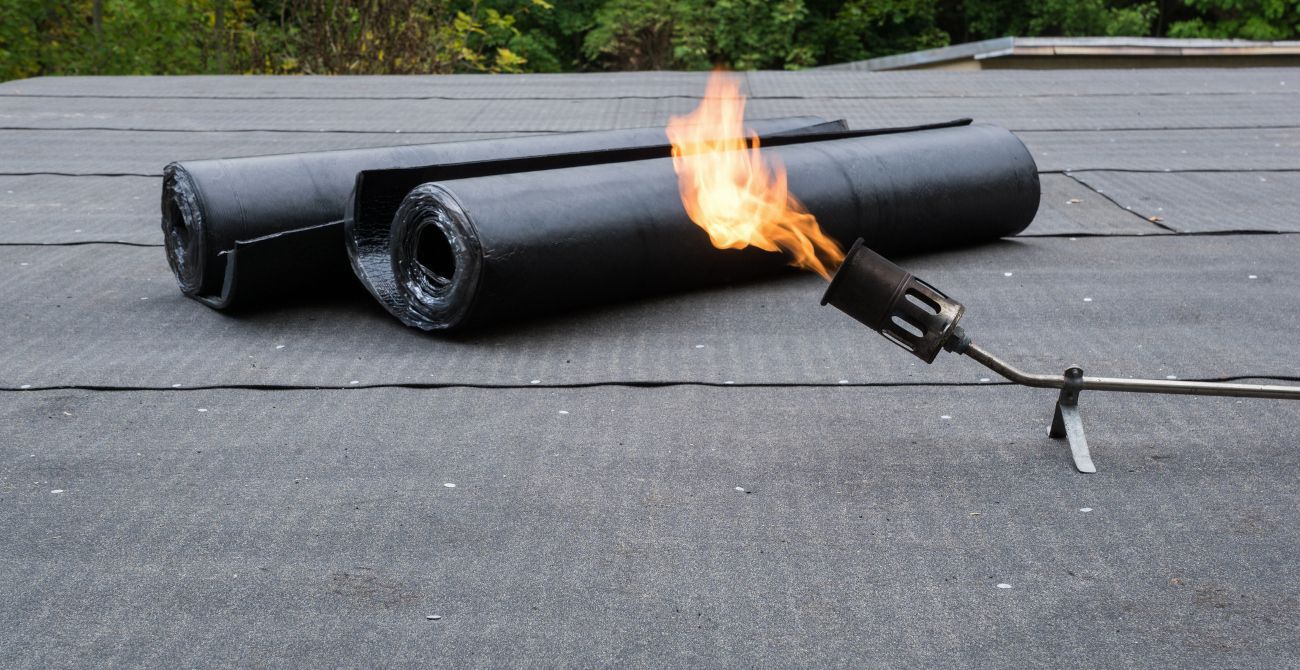
The best and cheapest solution for covering a flat roof is bituminous roofing felt. Its construction has changed over the years, and the stereotype of a material that cracks and needs frequent renovation has long been out of date. Modern roofing felts are highly resistant to changeable weather, forming a watertight layer over the roof surface. There are three basic types of bituminous roofing felt, providing a complete roof covering solution:
- underlay felt – the first layer, which is very durable and provides the main protection against leaks,
- cap sheet – the second felt layer, laid over the underlay. It protects the lower layer and provides a finish,
- waterproofing felt – used as additional waterproofing in areas particularly exposed to water.
Roofing felt can also be classified by how it is applied:
- torch-on felt – laid with overlaps from 8 to 10 cm wide. The area is heated from below with a torch, and the felt is then unrolled so that the overlap covers the layer below,
- bonded felt – the layers are bonded with cold or hot bituminous adhesive. This solution is mainly used for emergency repairs,
- mechanically fixed felt – large sheets are secured with metal screws.
How can you protect a flat roof covering?
Polish weather conditions are tough on flat roof coverings. The material is exposed to the strong effects of rain, snow, wind and sunlight. Roofing felt is flexible enough to withstand both very low and high temperatures, but its surface needs maintenance from time to time. To enjoy a reliable, watertight roof, it is worth having it inspected and maintained by a professional company with many years of experience.
Questions about your roof?
An adviser will review your plans and choose materials to suit your budget.