Flat roof coverings
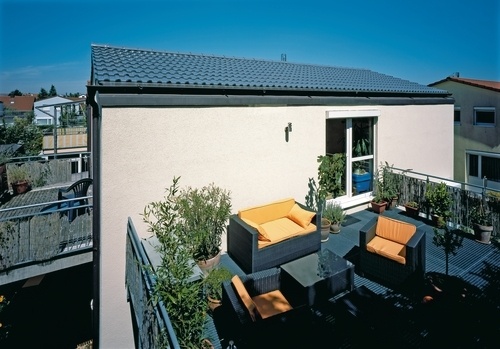
A flat roof protects the building from precipitation, heat loss in winter and excessive overheating in summer. It consists of several layers, each serving a different purpose. The outer layer forms the roof covering and is usually made from specialist bituminous roofing felt. This must provide complete watertightness and prevent moisture from entering the building. The advantages of flat roofs include a simple roof structure and easy access to the roof surface for repairs when needed. Flat roofs can be arranged as gardens or terraces, or even accommodate a swimming pool.
Types of flat roof
A flat roof structure usually includes a reinforced concrete or clay block and reinforced concrete slab forming the load-bearing structure. Thermal insulation is laid on top of it. The roof falls are formed by a sloping layer, e.g. screed or tapered EPS insulation boards, which also insulate the roof. The waterproofing, i.e. the flat-roof covering, is laid on top. According to the arrangement of their layers, flat roofs are classified as solid, two-part and vented. Depending on whether insulation is present, flat roofs can also be divided into insulated and uninsulated types. A further distinction is between flat roofs with external drainage, sloping towards gutters, and roofs with internal drainage, known as recessed roofs.
Categories
- Green roofs
-
 Roofing membranes and their uses
- Bituminous roofing felt
- Guttering systems
- PVC / EPDM membranes
Watertight coverings made from bituminous roofing felt
A roof covering is the watertight outer part of a roof, protecting the building from the weather. On a flat roof, the covering is made using specialist bituminous roofing felt. This creates a waterproof roof surface and effectively protects the interior from the weather, particularly rain and snow. We offer many types of bituminous roofing felt, depending on the application and installation method. Explore our range of traditional and new-generation bituminous roofing felt!
Principles of laying roofing felt on a flat roof
Flat roof coverings should be installed in suitable conditions to avoid errors when laying the material. The ambient and substrate temperature, the type of adhesive and the method of installation should be chosen for the specific system, in line with the design and the manufacturer’s current installation instructions. Another important consideration is the amount of roofing material. For all types of roofing felt except torch-on felt, the principle is that the number of layers laid should depend on the roof slope. The shallower the slope, the more layers are needed. The final principle concerns the laps between strips of roofing material in the top layer. Ideally, they should be laid in the direction of the prevailing winds in the area.
Contact your nearest branch
Ambit branch 4D Grupa network partner