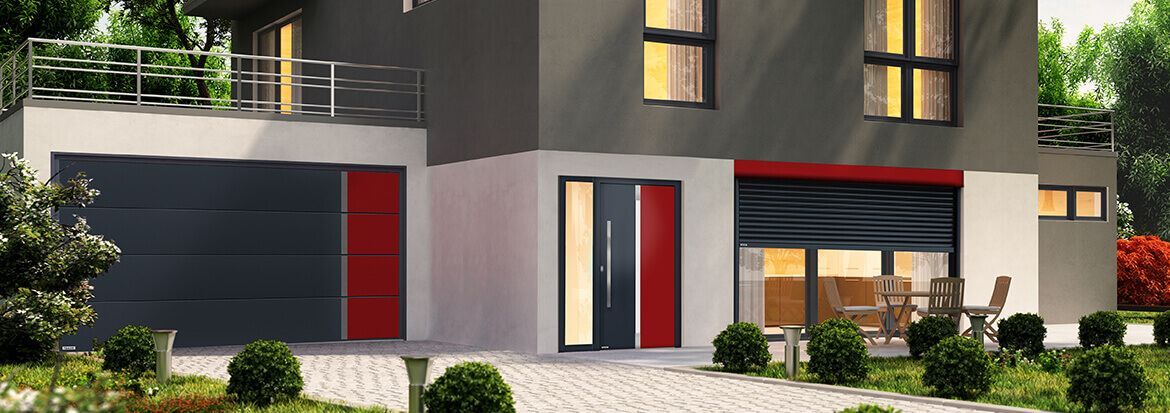
Windows for single-family homes come in a wide range of models, and the choice of colours can leave any client spoilt for choice. There is plenty to choose from. We are not restricted to fitting white or wood-effect windows. Today, the only real limit is our imagination.
Windows are a defining feature of every building. Which material should you choose? What should you look for? What colours could the windows in your new home be? We will explain these key questions.
The first decision is the window material. The available options include PVC, timber, aluminium and aluminium-clad timber.
If we choose timber or aluminium windows, we can use the RAL colour range. This means we can create windows for our dream home in any colour we wish. Despite the wide choice, remember that there is a range of standard colours and others that cost extra.
PVC windows offer much less scope for customisation. Here, we are limited by the foil finish and must choose from several dozen available colours. There is good news for those who need their windows to match the rest of the building: we can highlight the individual character of your home.
Windows can be ordered with two different foil colours. For example, the exterior foil can be white so that the windows blend in with the building or estate. Inside, bleached oak or another wood-effect finish can add a tasteful sense of warmth.
In our view, one of Dako’s most beautiful projects featured pistachio-coloured timber windows, made for export. We show this distinctive project in the photograph below. Here in our beautiful country too, when planning a project by the sea, for example, we can choose turquoise windows to give the building a southern feel.
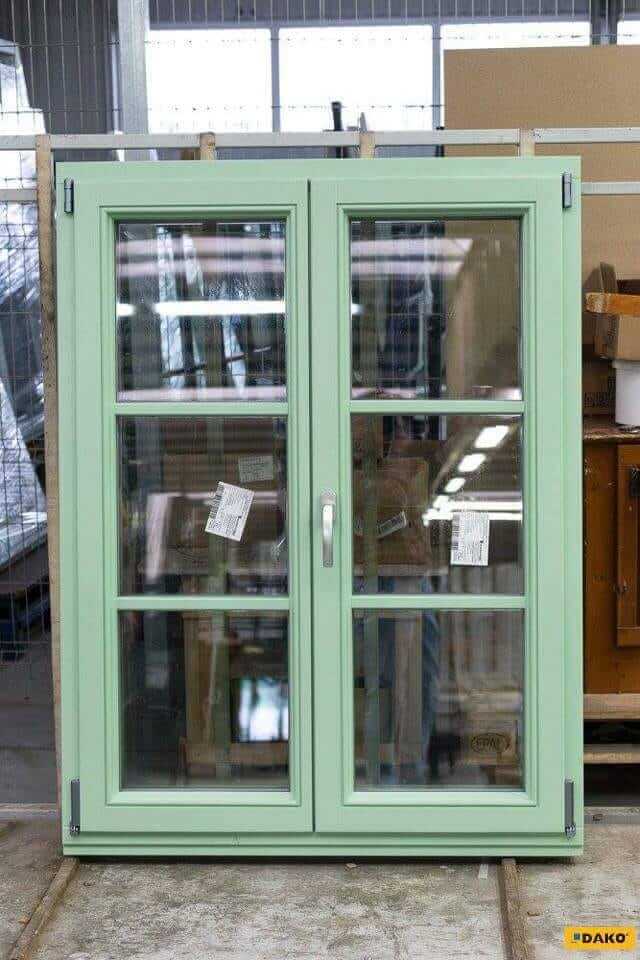
Many buildings of different architectural styles are now being built in Poland. Although modern design, minimalism and simple structural lines lead the way, a fondness for tradition and the idyllic character of buildings remains visible in different parts of the country. Timber windows can be enhanced with glazing bars, for example. These are ideal decorative features for windows inspired by elegant architecture. They give interiors a special atmosphere and façades a distinctive character.
If we prefer modern design, we often choose versatile PVC windows in anthracite grey. In recent years, this has been a favourite among clients building new homes. Of course, plastic windows are also available with a wood-effect foil finish. The foil is of very high quality, and non-specialists often find it very difficult to tell timber and plastic windows apart.
For a modern house, aluminium windows are another excellent solution, with an ultra-modern appearance and the widest colour range. We do not have to limit ourselves to RAL 7016. Aluminium windows also offer the greatest material durability and resistance to mechanical damage.
Another way to personalise windows is to match them to the building’s overall character. Dako responds to this with Harmony line, a collection of windows, garage doors, doors and roller shutters that form a coherent whole. All the combinations fit perfectly with current architectural trends.
Choosing windows for individual rooms
It is also worth considering windows tailored to individual rooms. This means choosing windows with appropriate features for the living room, kitchen or children’s room. Each room has particular requirements arising from its function.
The living room is a space for entertaining, where appearance plays a key role. Here, windows with concealed hardware can be fitted. They offer clear aesthetic benefits and, surprisingly, very good thermal insulation. With the hinges completely hidden in the dry chamber between the sash and frame, no thermal bridge forms.
A child’s room should be safe above all. A lockable handle can prevent a child from opening the window unaided. Safety glass is worth using in this room. It consists of a film with glass bonded to both sides. Safety glass has increased resistance to breakage and remains in the frame if damaged.
Our range also includes windows with gap ventilation, a special form of microventilation around the window. These windows are ideal for kitchens and bathrooms, where humidity is high. During winter gap ventilation, the room does not cool suddenly, so energy losses are much lower.
Conclusion
As you can see, every customer has different needs, and there is a solution for each need. Dako’s window range can meet even our customers’ most demanding expectations. Contact our adviser. Together, we will discuss your needs and prepare a tailored quotation.
Questions about your roof?
An adviser will review your plans and choose materials to suit your budget.